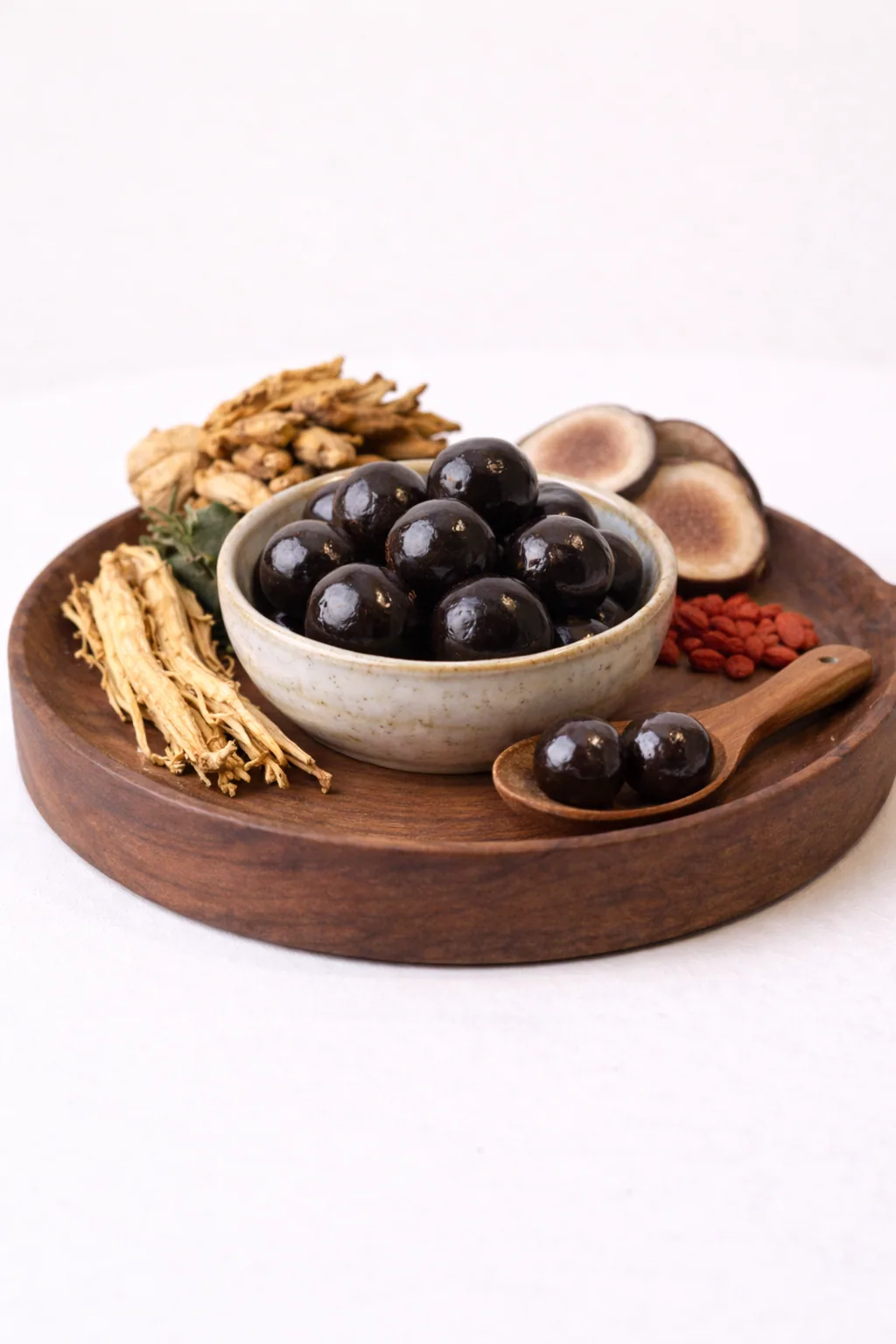
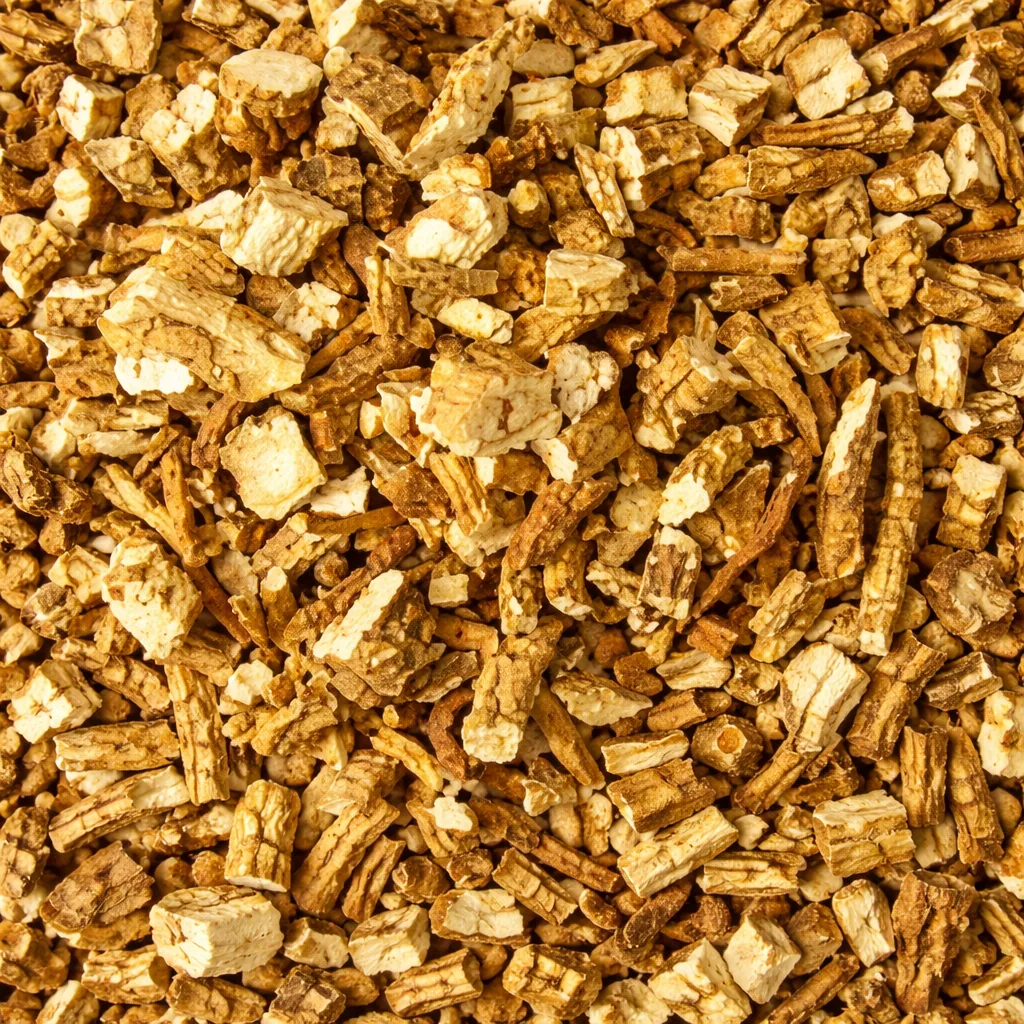
Bangpung (Siler)
KoreanWe use Korean bangpung. It expels wind pathogen (風邪), addressing migratory joint pain and reducing inflammation around the joints.


If even one applies to you, Gwanjeoldan may be the answer.
Pain grows in knees and hips,
and stairs are hard to climb.
As cartilage wears, wind, cold, and damp invade easily. Gwanjeoldan drives out these pathogens and creates conditions for cartilage regeneration.
Pain moves between joints
with severe morning stiffness.
Wind pathogen (風邪) travels between joints causing inflammation. The wind-dispelling herbs in Gwanjeoldan address migratory pain.
Joints ache and feel stiff
when the weather is cloudy or cold.
A classic case of Cold-Damp (寒濕) invading the joints. Gwanjeoldan's cold-dispersing and damp-removing herbs resolve both simultaneously.
Recovery is slow after joint surgery
and you worry about recurrence.
Gwanjeoldan strengthens the weakened tissue around the joint after surgery. It reinforces Liver-Kidney to accelerate recovery of ligaments and tendons.
Not a painkiller — a formula that revives the joints.
Stiff fingers in the morning, achy knees on the stairs. This is not simple aging. Wind, cold, and damp have invaded the joints.
The Donguibogam attributed joint pain to three pathogens (邪氣). Samgieum addresses all three at once — a formula validated over 400 years.
Joint disease demands sustained intake. Samgieum in pill form makes daily intake easy, fundamentally strengthening cartilage and ligaments.
Gwanjeoldan prescriptions since opening
Survey after 4 weeks of use
Restoration of joint movement range
Rate of return to daily life
The principle of addressing wind, cold, and damp simultaneously
Bangpung and ganghwal
remove wind pathogen (風邪) around the joints,
addressing migratory,
traveling pain.
Buja and gyeji
melt the cold (寒氣) within the joints,
relieving aching pain
that worsens in cold weather.
Changchul and euiin
expel damp pathogen (濕邪)
from joint tissues,
resolving swelling and heaviness.
Duchung, useul, sokdan
reinforce the liver and kidneys,
enhancing bone and tendon regeneration
and slowing degeneration.
Gwanjeoldan's benefits are supported by modern clinical research.
Rate of VAS pain score reduction after 3 months
Journal of Korean Medicine
Normalization rate of joint range of motion (ROM)
Journal of Korean Medicine Rehabilitation
Improvement in Activities of Daily Living (ADL)
J Korean Med Rehabil
The Samgieum (三氣飮) modified formula group showed significantly greater reduction in VAS joint pain compared to controls (p<0.01), along with improvements in joint ROM and gait function — clinically confirming the joint-treatment effect of a formula that addresses wind, cold, and damp simultaneously.
Geum Maek's Gwanjeoldan is based on the original Samgieum formula that addresses wind, cold, and damp simultaneously, with added herbs that reinforce Liver-Kidney — treating root causes and strengthening joints at once.
When wind, cold, and damp
combine, they cause Bi syndrome (痺症):
if wind prevails, it is wandering Bi (行痺);
if cold prevails, it is painful Bi (痛痺);
if damp prevails, it is fixed Bi (着痺).
— Donguibogam (東醫寶鑑)
Preserves the Samgieum formula that treats wind, cold, and damp simultaneously. All three causes must be treated together for root resolution.
Kneaded with honey into pills for convenient intake. An optimal formulation for joint disease requiring long-term intake.
Added herbs such as duchung, useul, and sokdan strengthen bones and tendons — going beyond mere pain relief to fortify the joints themselves.
We use Korean bangpung. It expels wind pathogen (風邪), addressing migratory joint pain and reducing inflammation around the joints.
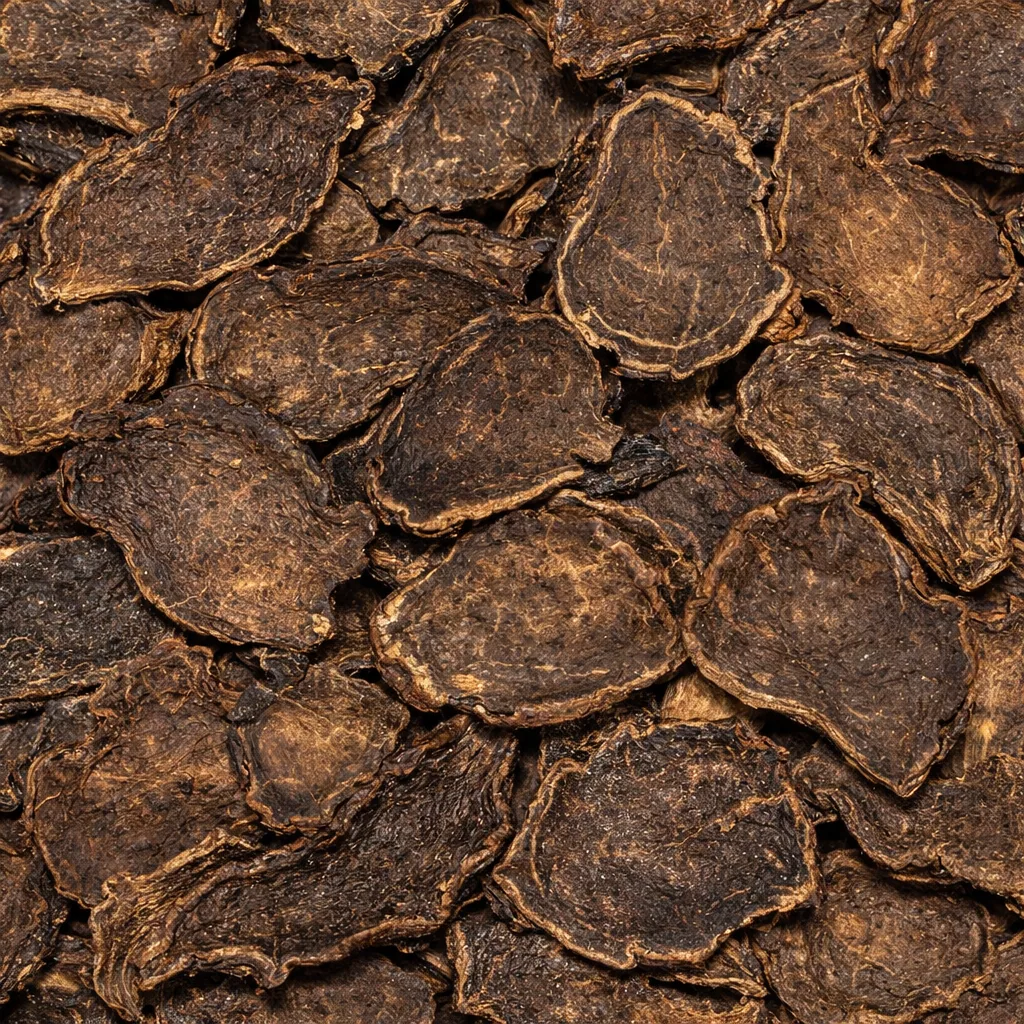
We use safely processed Korean buja. It melts the cold (寒氣) within joints, relieves aching that worsens in cold weather, and improves blood flow.
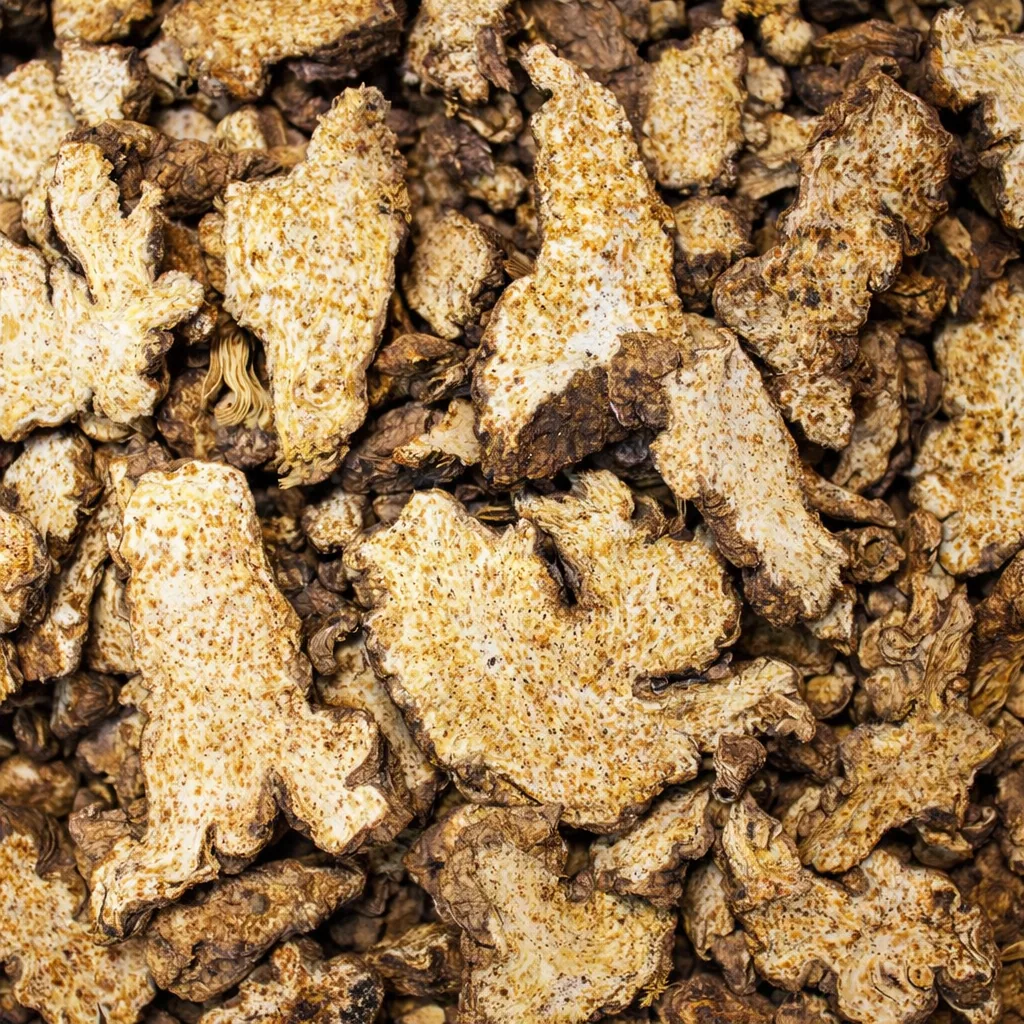
We use Korean changchul. It expels damp pathogen (濕邪) from joint tissues, resolving swelling and heaviness, while strengthening the Spleen-Stomach for better nutrient absorption.
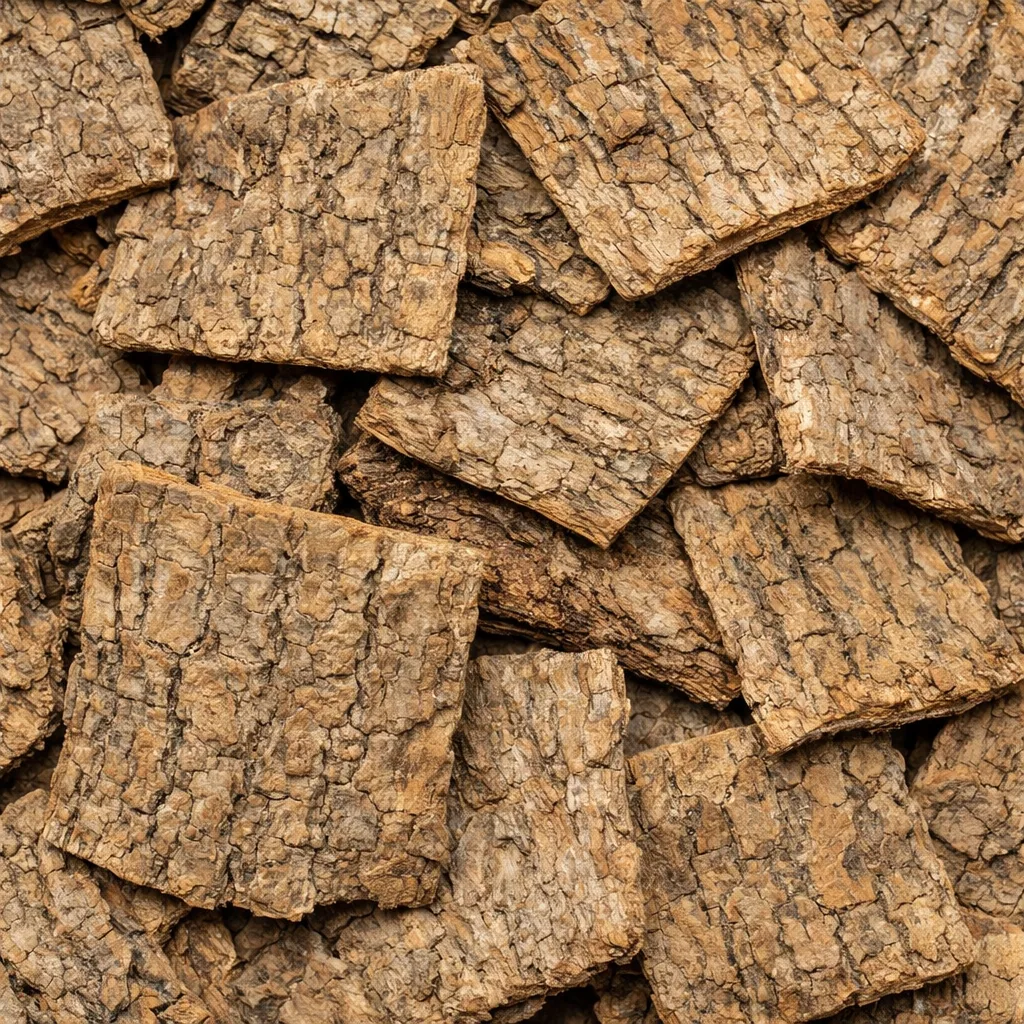
We use Korean duchung. It reinforces the liver and kidneys, enhances bone and tendon regeneration, slows joint cartilage degeneration, and supports fundamental joint health.
Book your visit by phone or online.
Pulse diagnosis + precise joint range-of-motion
evaluation to assess condition.
We adjust the herb composition
based on the affected joint and symptoms.
We guide correct intake and
complementary joint exercises.
Supplements like glucosamine focus on replenishing cartilage components. Gwanjeoldan removes the root causes — wind, cold, and damp — while simultaneously reinforcing Liver-Kidney to strengthen the bones and tendons themselves. Addressing cause and reinforcement together is the key difference.
Pain relief is usually felt within 2–4 weeks; for fundamental joint strengthening, at least 3 months is recommended. For degenerative arthritis, 6 months or longer can slow cartilage degeneration.
Yes. Because Gwanjeoldan treats the causes (wind, cold, damp) rather than a specific joint, it is effective for shoulders, wrists, hips, ankles, and all joints.
Get consultations and prescriptions without visiting.
Try our easy consultation service.
Stories from those who restored joint health with Gwanjeoldan.
I gave Gwanjeoldan to my 65-year-old mother for her degenerative arthritis and her gait became much easier. She used to limp, but within a month she could walk normally T_T. Evening hours mean I don't have to worry about timing.
I stopped taking glucosamine after starting Gwanjeoldan. The clinic is close to home, which is great.
This is my fourth order of Gwanjeoldan~ It's a must-have for our family. The director greets me with a smile and I feel comfortable.
3+ more real treatment cases
Learn more about Gwanjeoldan.
The vicious cycle in which weakened bones increase joint burden, and how to manage them at the same time.
An explanation of the benefits of Gwanjeoldan and the role of Korean medicine in treating degenerative arthritis.
A detailed look at the key herbs in Gwanjeoldan and their synergistic effects.
RESEARCH
Yoo DH, Kim HA, Song YW, et al.
Hwang JH, Yim MH, Go HY, et al.
Oh JM, Baek SH, Kwon OS, et al.
Related Resources
Continue with the most relevant guides and care pages.
An explanation of the benefits of Gwanjeoldan and the role of Korean medicine in treating degenerative arth...
A detailed look at the key herbs in Gwanjeoldan and their synergistic effects.
Read articleJoint care strategies by age group and lifestyle rules to protect joint health.
Read article