
🤢
Chronic Indigestion
Even small amounts cause heartburn — chest feels blocked.


The endoscopy says nothing's wrong,
yet I'm still hurting and uncomfortable.
Even small amounts cause heartburn — chest feels blocked.
Sour fluid rises, chest burns, throat feels obstructed.
Gas builds up; diarrhea and constipation alternate.
Stomach hardens and won't move;
whole body feels heavy and tired.
If any of the symptoms below apply,
stomach medicine alone won't resolve it.
Even small amounts block the chest
and digestion stalls
Stomach motility is reduced and food stagnates. When phlegm-stasis (痰積) builds on the stomach wall, the stomach hardens and chronicity follows.
Sour fluid rises
and chest burns
Lower esophageal sphincter dysfunction and excess acid are causes. Stress lets liver Qi (肝氣) press the stomach, worsening reflux.
Gas builds up
and bowel movements are irregular
The intestine's autonomic regulation is unstable. Restoring Spleen-Stomach (脾胃) transforming function normalizes the bowel rhythm.
Constantly take stomach medicine
because of discomfort
Antacids suppress acid but don't restore stomach motility itself. Long-term use lowers digestive power further and can cause nutrient absorption problems.
Just 1 minute. Find the right prescription for you.
1 / 4
Many patients receive a 'no abnormality' endoscopy verdict yet still cannot digest. About 70% of functional dyspepsia patients show no notable findings on endoscopy (Korean Gastroenterology Society, 2020). The reason: endoscopy only sees inner surface lesions — it cannot evaluate how well the stomach moves, how the autonomic nervous system regulates motility, or accumulated outer-wall damjeok.
We revive the rhythm of a tired, stalled stomach to support digestion.
We melt and discharge hardened waste accumulated on the outer stomach wall.
We calm esophageal/stomach inflammation and regenerate damaged mucosa.
We stabilize stress-sensitized stomach nerves to prevent recurrence.
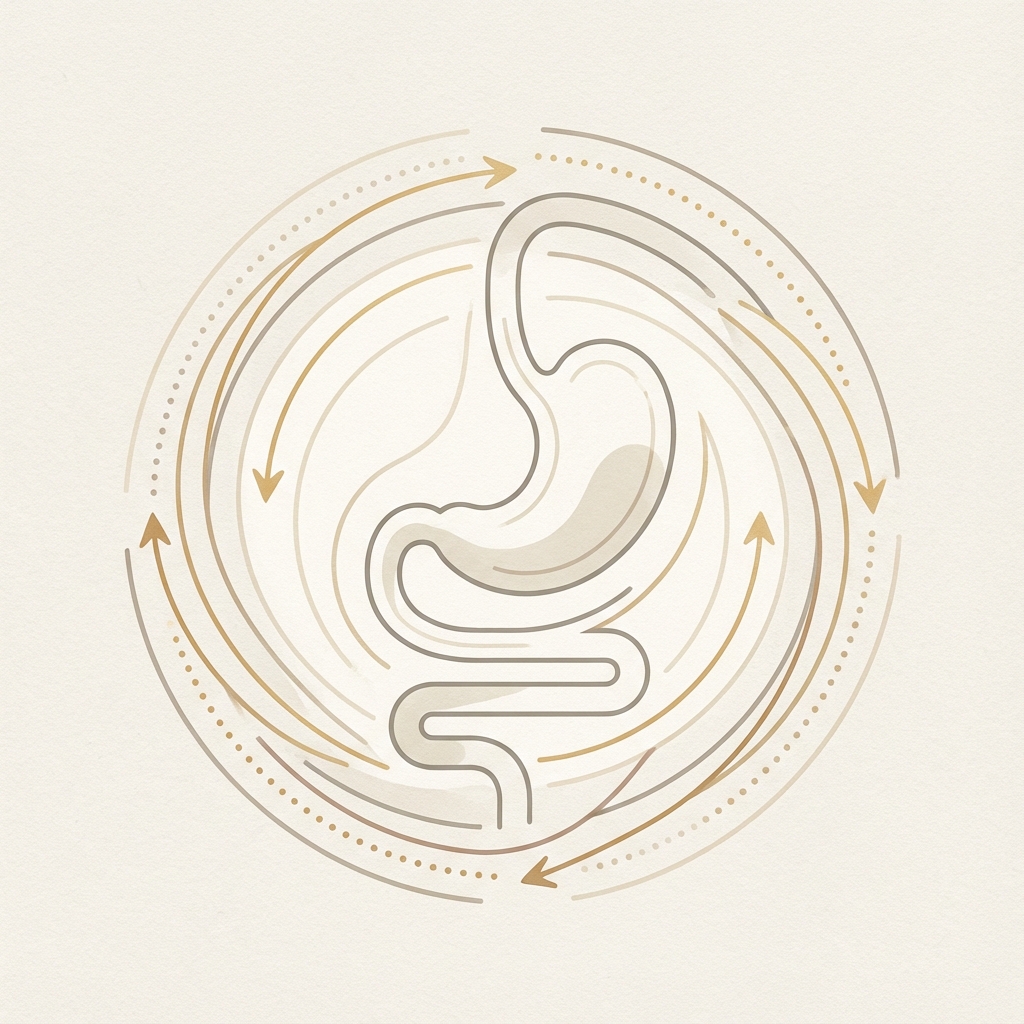
Even with the same indigestion, treatment differs by cause.
Gastric atony, food stagnation (sikjeok, 食積)
Stomach Motility-Boosting Herbal Medicine
Promotes stomach motility to relieve fullness and aid digestion.
Liver-Stomach disharmony (ganwibulhwa, 肝胃不和), acid reflux
Acid-Neutralizing & Mucosa-Protecting Herbal Medicine
Regulates stomach acid and treats esophageal mucosal inflammation.
Spleen-Kidney Yang deficiency (bisinyangheo, 脾腎陽虛), cold-bowel syndrome
Bowel Function-Strengthening Herbal Medicine
Warms the bowels to normalize defecation and improve absorption.
Liver Qi stagnation (gangiulkyeol, 肝氣鬱結), nervous gastritis
Autonomic-Stabilizing Herbal Medicine
Stabilizes sensitized autonomic nerves to fundamentally treat stress-induced indigestion.
Suppressing symptoms with antacids alone doesn't bring fundamental recovery.
We restore strength to the weakened stomach to return your body to one that digests on its own.
Melt and discharge waste long-accumulated on the stomach wall, calming inflammation.
Revive Spleen-Stomach (脾胃) function so the stomach moves vigorously on its own.
Correct eating habits and improve constitution to prevent recurrence of digestive disease.
Based on abdominal and pulse diagnosis, we prescribe individualized herbal medicine. We melt hardened damjeok and recover Spleen-Stomach motility to create an environment where the stomach digests on its own.
Acupuncture and pharmacopuncture at abdominal acupoints revive stomach motility rhythm. We relax stiff abdominal muscles and promote circulation around the stomach.
Digestive disease is directly linked to eating habits. We guide foods to avoid and foods that help according to constitution, and correct eating speed/timing along with lifestyle patterns.
Korean medicine effects on digestive disorders are validated by modern clinical research.
Symptom improvement after herbal treatment in functional dyspepsia
Journal of Internal Korean Medicine
Abdominal pain/bowel movement improvement after acupuncture in IBS
World J Gastroenterol
Symptom score improvement after combined herbal medicine + acupuncture in reflux esophagitis
J of Gastroenterology
A meta-analysis of 14 double-blind placebo-controlled RCTs (total 1,424 patients) showed the herbal treatment group had a 45% higher symptom improvement rate than placebo in functional dyspepsia (RR=1.45, 95% CI 1.31-1.60), with significant quality-of-life improvement as well (SMD).
We precisely diagnose your current condition,
deficient energy, and lifestyle habits.
We compose the optimal blend of herbs
to match your constitution and symptoms.
In our in-house decoction room, we brew your remedy
with clean water and selected herbs.
We guide proper intake and lifestyle management
to maximize effectiveness.
Acute indigestion: 1-2 weeks. Chronic digestive disorders: 2-3 months. Including constitution improvement, 3-6 months of consistent treatment is effective for preventing recurrence.
Yes. Acupuncture promotes gastric motility and regulates the autonomic nervous system, effectively easing indigestion, abdominal pain, and nausea. WHO recognizes digestive disorders as an indication for acupuncture.
Acupuncture, cupping, and chuna are covered by national health insurance. For functional dyspepsia, herbal prescriptions are also eligible for insurance, reducing the burden. Other herbal medicines are non-covered but may be claimable through private medical insurance.
Get consultations and prescriptions without visiting.
Try our easy consultation service.
Stories of those who met a comfortable belly together with 금맥한의원.
My stomach was so weak I'd get indigestion from eating just a little, but after a month of herbal medicine my digestion improved a lot. I can even digest meat well now haha
Came in with sudden indigestion, one acupuncture session and my stomach was completely clear haha
Irritable bowel — stress used to give me stomachaches right away, but on herbal medicine my gut isn't so sensitive anymore~ Even during exam season I was fine.
3+ more real treatment cases
Health information for stomach health and digestive recovery.
Korean medicine treatment for loss of appetite and the feeling that food is not being absorbed.
Korean medicine perspectives and treatment strategies for irritable bowel syndrome, where stress triggers gut symptoms.
When proton pump inhibitors are not enough: a Korean medicine view of GERD as failure of stomach qi to descend.
RESEARCH
Han CH, Seo JY, Moon KW, et al.
Kwon CY, Song JH, Lee DH, et al.
Han SJ, Kim DH, Lee JA, et al.
RESEARCH
Han CH, Seo JY, Moon KW, et al.
Kwon CY, Song JH, Lee DH, et al.
Han SJ, Kim DH, Lee JA, et al.
Related Resources
Continue with the most relevant guides and care pages.
Korean medicine perspectives and treatment strategies for irritable bowel syndrome, where stress triggers g...
When proton pump inhibitors are not enough: a Korean medicine view of GERD as failure of stomach qi to desc...
Read articleKorean medicine treatment for irritable bowel syndrome, where stress and bowel function are tightly linked.
Read article