😣
Severe Persistent Pain
Outpatient treatment doesn't reduce
pain effectively.


Intermittent outpatient treatment in busy daily life
often interrupts treatment effects.
Outpatient treatment doesn't reduce
pain effectively.
Pain prevents sleep,
and fatigue is accumulating.
Your condition makes commuting and household activities difficult.
You feel better after treatment, but it returns to
the original state the next day.
Just 1 minute. Find the right prescription for you.
1 / 5
While outpatient treatment involves 1-2 sessions per week before returning to daily life, inpatient treatment provides intensive acupuncture, pharmacopuncture, chuna, and herbal medicine twice daily.
With adequate rest between treatments, recovery is 2-3 times faster than outpatient care.
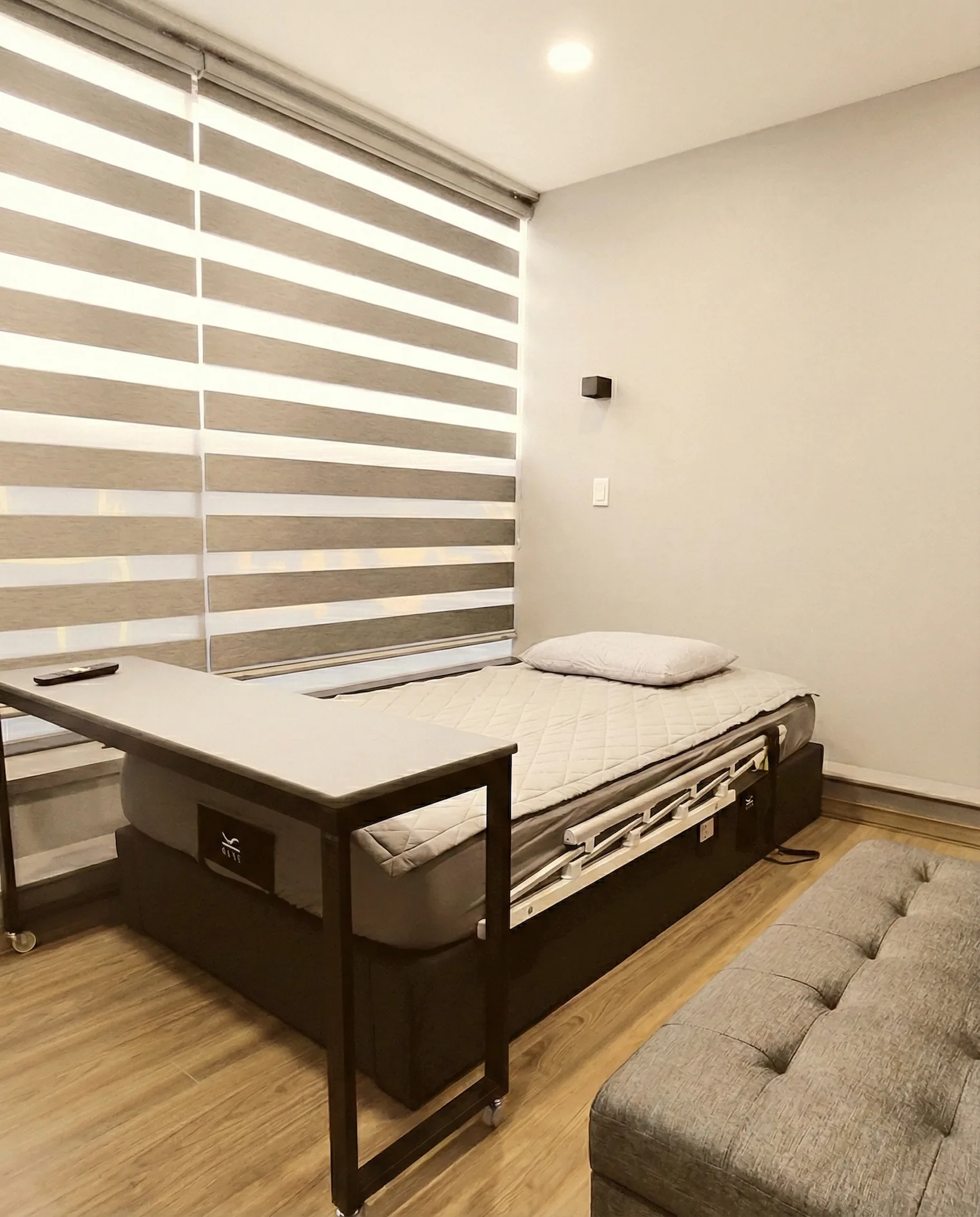
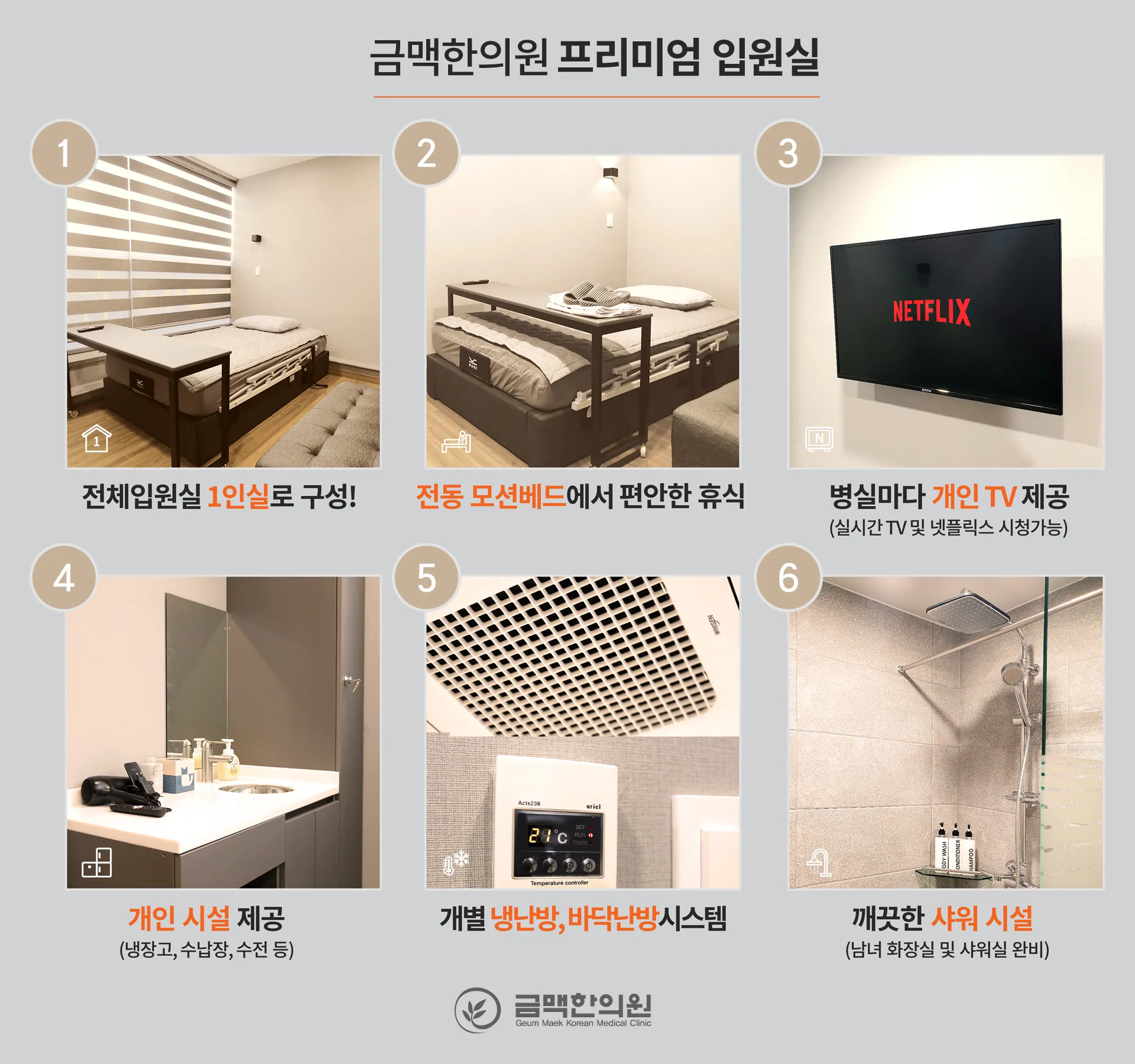
금맥한의원's single rooms provide an environment where you can focus solely on treatment in an independent space. Equipped with TV, Wi-Fi, Netflix, and various books for a comfortable hospital stay.
For traffic accident patients, all hospitalization costs are fully covered by auto insurance.
On admission day, comprehensive diagnosis establishes a personalized intensive treatment plan tailored to the patient's condition.
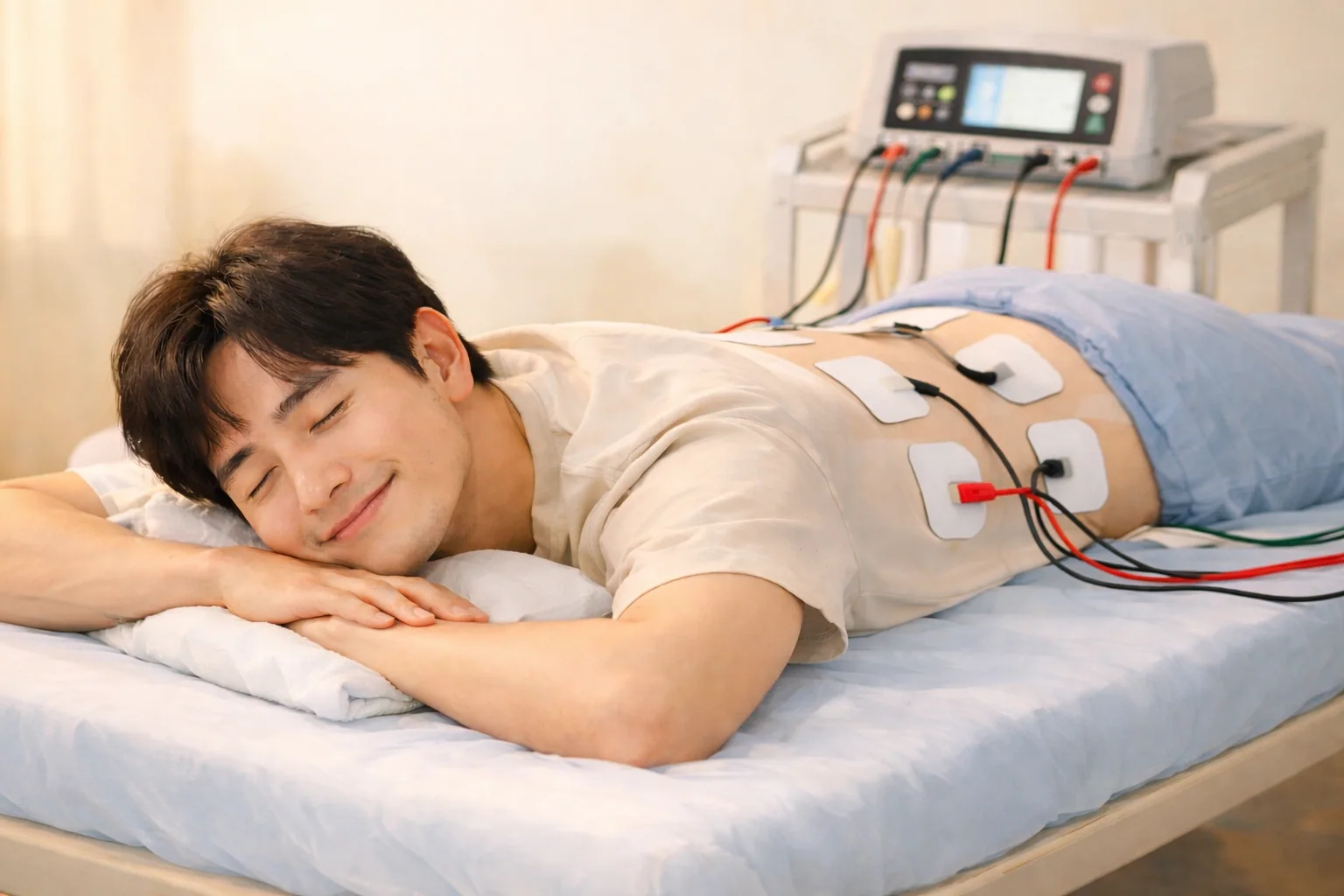
Combined treatments including acupuncture, pharmacopuncture, chuna, moxibustion, and cupping are intensively performed daily for rapid improvement.
Adequate rest between procedures and herbal medicine maximize regeneration of damaged tissue and prevent recurrence.
Many situations require hospitalization.
We design the optimal treatment for your symptoms and circumstances.
Acute trauma, multiple pain
Traffic Accident Inpatient Intensive Treatment
Through auto insurance coverage with no out-of-pocket cost, you receive intensive treatment twice a day during hospitalization.
Disc herniation, nerve compression
Non-Surgical Inpatient Treatment
Chuna correction and pharmacopuncture reduce disc compression while herbal medicine strengthens the musculoskeletal system.
Delayed post-surgical recovery, adhesion
Post-Surgical Korean Medicine Rehabilitation
Acupuncture and pharmacopuncture resolve swelling and adhesions, while tonic herbal medicine restores stamina and immunity.
Schedule a hospitalization consultation
by phone or online.
After examination by a Korean medicine doctor,
the need for hospitalization is determined and treatment plan established.
Admitted to a single room,
you receive intensive treatment twice daily.
After discharge, transitioning to outpatient treatment
for consistent progress management.
Korean medicine intensive treatment in an inpatient setting demonstrates faster recovery and higher treatment satisfaction compared to outpatient care.
Percentage of patients with significant NRS pain score improvement after intensive inpatient treatment
Journal of Internal Korean Medicine
Functional disability index improvement rate after combined inpatient treatment of herbs+acupuncture+chuna
Journal of Korean Medicine Rehabilitation
Positive response rate in patient satisfaction surveys after Korean medicine inpatient treatment
Journal of Korean Medicine
A retrospective analysis of 312 patients hospitalized with traffic accident aftermath showed that the combined inpatient treatment group of herbal medicine, acupuncture, and chuna had an average NRS pain score reduction of 4.2 points (p<0.001) during hospitalization, with 87.5% of patients returning to daily life upon discharge — confirming the efficacy of intensive inpatient treatment.
Hospital stay length varies by patient condition. For mild conditions, intensive inpatient treatment for 1-2 weeks is followed by outpatient care. For severe conditions or those requiring more than 2 weeks, long-term hospitalization is also possible. For traffic accidents, the hospital stay is determined by the patient's injury status.
Yes, Korean medicine clinic hospitalizations are processed through auto insurance personal injury coverage. Hospital fees, herbal medicine, acupuncture, pharmacopuncture, and chuna treatment are all covered by insurance with no out-of-pocket cost.
No. Geummaek Korean Medicine Hospital's single rooms do not incur separate premium room fees. You can receive comfortable treatment in an independent space ensuring privacy at the same cost as multi-occupancy rooms.
Get consultations and prescriptions without visiting.
Try our easy consultation service.
Stories of those who regained health at 금맥한의원's inpatient ward.
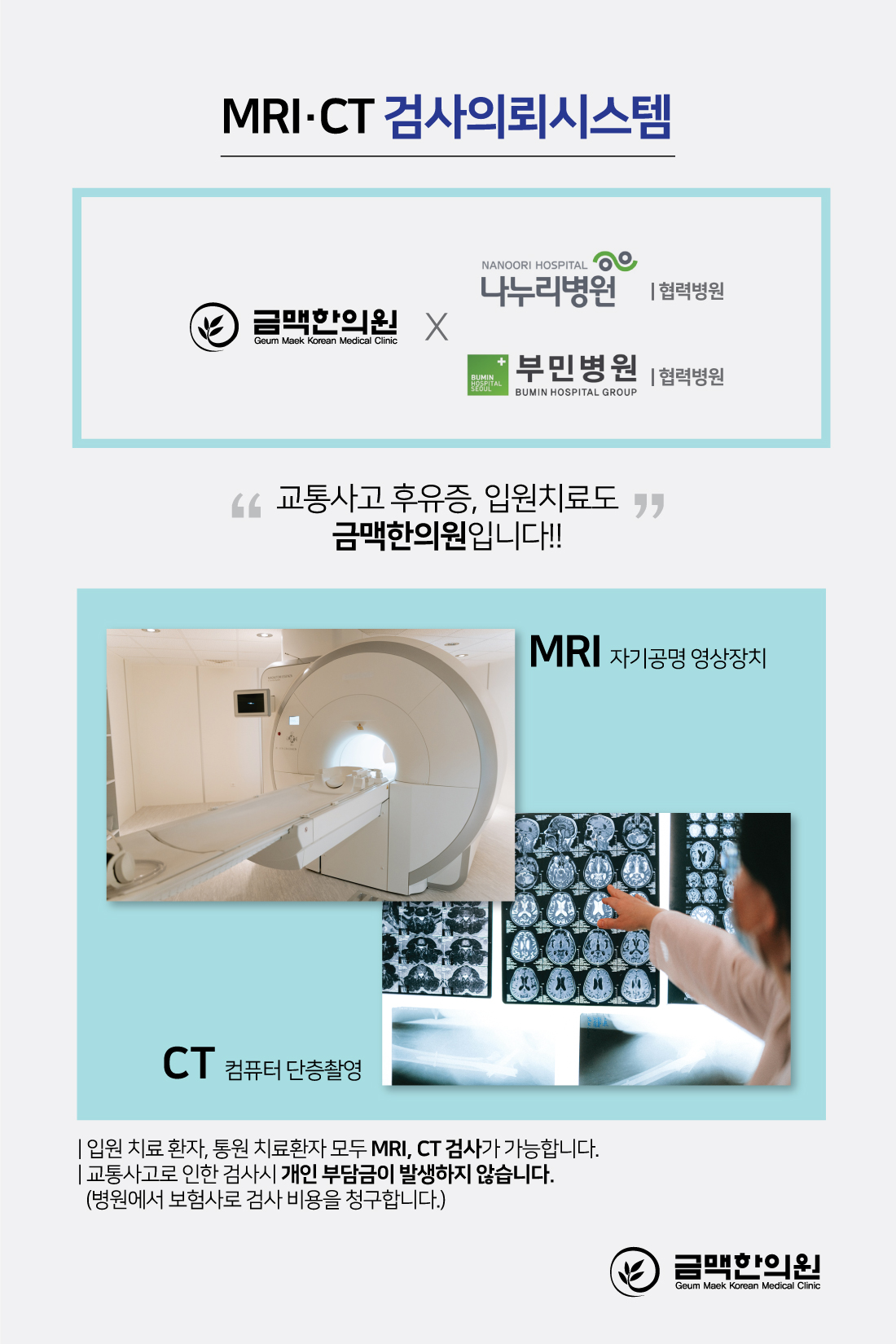
I got admitted and had an X-ray taken,
and the doctor showed me the image on the screen
while explaining the bone condition and treatment plan.
Seeing it with my own eyes made it much easier to understand,
and I felt reassured during treatment.
Chuna, acupuncture, and physical therapy were all great,
and the private inpatient room is really nice.
The night-shift staff are kind, the front desk staff are kind too,
the motion bed is great,
I need to rest properly here.
A lot of people come for diet programs.
They have a skin program too, I'm tempted.
I visited on a friend's recommendation, and as expected from a specialist doctor, the consultation and treatment were so thoughtful and just what I needed. I'm leaving very satisfied~
This is the best Korean medicine clinic I've ever been to~ T_T
3+ more real treatment cases
Discover useful information about intensive inpatient care.
If you have felt the limits of outpatient care, intensive inpatient management can be the turning point in your recovery.
An introduction to the features of inpatient care at a Korean medicine clinic and how it differs from outpatient treatment.
A guide to applying national health insurance and indemnity insurance to inpatient care at a Korean medicine clinic.
RESEARCH
Min IK, Kang BK, Won JH, et al.
Sohn DW, Kim CH, Lee SH, et al.
Hong KE, Son AY, Kim JI, et al.
RESEARCH
Min IK, Kang BK, Won JH, et al.
Sohn DW, Kim CH, Lee SH, et al.
Hong KE, Son AY, Kim JI, et al.
Related Resources
Continue with the most relevant guides and care pages.
With automobile insurance covering intensive inpatient treatment, you can aim for a complete recovery witho...
With intensive conservative treatment before surgery, more than 70% of patients improve without an operation.
Read articleFrom morning rounds to evening moxibustion — a time-by-time guide to a real day of inpatient care.
Read article